A bathroom is no longer just a functional space in the home—it has evolved into a personal wellness zone, a place where design meets relaxation, and where daily routines transform into calming rituals. In 2026, interior design trends are shifting strongly toward minimalism inspired by spa environments, where simplicity, clarity, and emotional comfort define the experience. Creating a minimal bathroom with a spa-like style is not about removing everything or making the space feel empty. Instead, it is about intentional design—choosing fewer elements but making each one meaningful. It’s about soft textures, natural materials, calming colors, and lighting that supports relaxation rather than harsh visibility. The goal of this guide is to help you understand how to design a bathroom that feels timeless, elegant, and emotionally soothing. We will explore 15 carefully designed ideas that combine modern minimalism with spa-inspired luxury. Each idea focuses on balance—between function and aesthetics, between simplicity and warmth, and between structure and softness. Whether you have a small apartment bathroom or a large luxury suite, these principles will help you transform your space into a calm retreat that feels like a high-end spa experience every single day.
1. Soft Neutral Color Palette for Instant Calmness
A spa-like minimal bathroom always begins with color. Soft neutral tones such as white, beige, sand, and light gray create a visual foundation that immediately communicates calmness. These colors reflect light beautifully, making the space feel larger, cleaner, and more peaceful. The key to using neutral colors effectively is layering different shades rather than relying on a single flat tone. For example, combining warm white walls with beige stone tiles and light gray accents creates depth without overwhelming the eye. Avoid strong or saturated colors, as they break the emotional flow of the spa-like environment. Instead, think of your bathroom as a continuous visual space where everything blends smoothly. Tips: Use warm white instead of pure white Combine 2–3 neutral shades only Avoid high contrast colors Use matte finishes for softness Keep palette consistent throughout This approach sets the emotional foundation for a truly relaxing bathroom.
2. Natural Stone Elements for Organic Luxury
Natural stone is one of the strongest design elements in spa-inspired bathrooms. Materials like marble, travertine, limestone, or sandstone bring an organic and grounded feeling that synthetic materials cannot replicate. Stone adds texture, depth, and a sense of permanence. When used correctly, it transforms a minimal bathroom into a luxurious retreat without adding visual clutter. You don’t need to overuse stone. Even a single feature wall, countertop, or sink basin made of natural stone can elevate the entire space. Tips: Use stone as a focal point, not everywhere Choose soft veined or neutral-toned stone Combine with wood for warmth Avoid overly polished or shiny finishes Keep patterns natural and subtle Stone introduces a spa-level luxury feel that is both timeless and calming.
3. Walk-In Shower with Frameless Glass Design
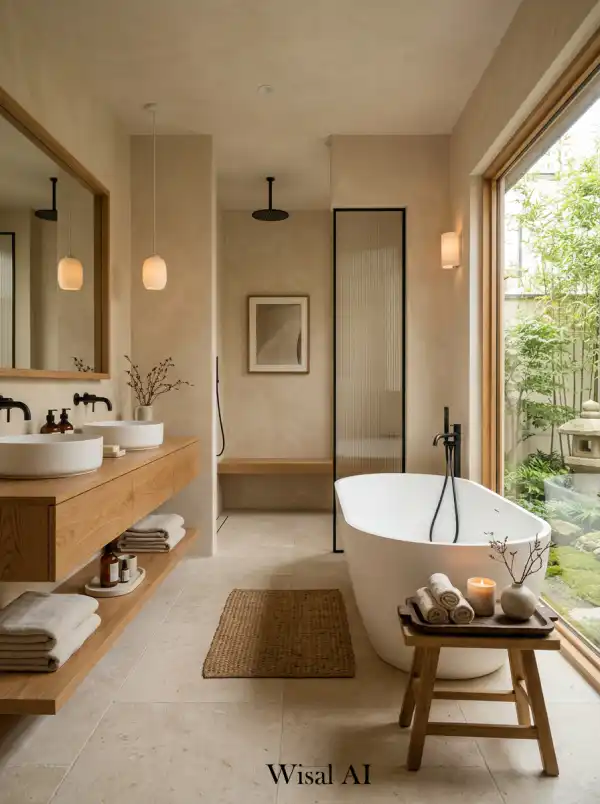
A walk-in shower with frameless glass is essential for achieving a modern spa-like bathroom. It removes visual barriers and creates a seamless flow between different areas of the bathroom. This design makes the space feel larger, cleaner, and more open. Without heavy frames or curtains, the shower becomes part of the architectural design rather than a separate enclosure. To enhance the spa experience, consider adding a rainfall showerhead and hidden drainage systems for a completely minimal look. Tips: Use frameless or nearly invisible glass panels Keep shower area clutter-free Add rainfall shower system Use large format tiles for continuity Maintain consistent flooring inside and outside shower This design instantly elevates the bathroom into a modern spa environment.
4. Hidden Storage to Maintain Visual Cleanliness
One of the core principles of minimal spa bathrooms is visual clarity. Clutter destroys relaxation, which is why hidden storage is essential. Instead of open shelves filled with items, opt for built-in cabinets, wall niches, and concealed drawers. Everything should have a designated place that is invisible to the eye. The goal is not just organization—it is emotional peace. A clean surface creates a clean mind. Tips: Use recessed wall storage Keep countertops completely clear Match cabinet colors with walls Avoid visible plastic containers Store items in closed compartments Hidden storage is what separates a simple bathroom from a luxury spa experience.
5. Soft Layered Lighting for Spa Atmosphere
Lighting is one of the most powerful tools in bathroom design. Harsh lighting destroys relaxation, while soft layered lighting creates warmth and emotional balance. Instead of a single ceiling light, spa bathrooms use multiple light sources: ambient lighting, mirror lighting, and indirect LED strips. Warm light (around 2700K–3000K) is ideal for creating a soothing atmosphere that feels natural and calming. Tips: Use layered lighting instead of one source Install dimmable lights Add LED strips behind mirrors Avoid harsh white lighting Focus on indirect glow Lighting defines the emotional identity of your bathroom.
6. Floating Vanity for a Light and Airy Feel
A floating vanity is one of the most important design elements in a minimal spa-like bathroom because it completely changes how the space is perceived. Instead of having heavy cabinets that touch the floor and visually compress the room, a floating vanity creates an illusion of openness and lightness. This design works by freeing up the floor area, which immediately makes the bathroom feel larger and more breathable. That empty space beneath the vanity is not just visual—it also contributes to easier cleaning and a more hygienic environment, which is a key principle in spa design. From a visual perspective, floating vanities reduce weight in the lower part of the room and shift focus upward, especially when combined with soft mirror lighting or wall textures. This creates a balanced vertical flow that feels calm and modern. Materials matter greatly here. Light wood, matte white finishes, or soft stone textures are ideal because they maintain the natural and serene atmosphere. Avoid overly glossy or dark finishes unless used very carefully. Storage should remain hidden within the vanity itself. Drawers should be seamless, handle-less, and integrated into the structure to maintain the minimal aesthetic. Tips: Keep vanity wall-mounted, not floor-based Use soft natural materials like wood or stone Hide all storage behind clean panels Add indirect lighting underneath for glow Maintain empty floor space for visual lightness A floating vanity turns a standard bathroom into a modern spa-like experience by introducing air, space, and simplicity.
7. Minimalist Fixtures for Visual Harmony
In a spa-inspired bathroom, every small detail matters—especially fixtures like faucets, shower heads, and handles. Minimalist fixtures are designed to disappear into the space rather than dominate it visually. Instead of decorative or bulky designs, spa bathrooms rely on clean geometric forms with smooth surfaces and soft edges. The goal is to maintain visual harmony so that nothing feels excessive or distracting. Matte black, brushed nickel, or soft brass finishes work best depending on the overall color palette. However, the key is consistency—mixing too many finishes can break the calm atmosphere. Wall-mounted faucets are especially effective because they reduce clutter around sinks and countertops. Similarly, concealed shower systems keep mechanical elements hidden, reinforcing the clean spa aesthetic. Beyond appearance, functionality also matters. High-quality water flow, smooth temperature control, and silent operation contribute to the overall sensory experience of luxury and comfort. Tips: Choose simple geometric designs Avoid overly decorative fixtures Stick to 1–2 finishes only Prefer wall-mounted systems Keep visual lines clean and uninterrupted Minimal fixtures ensure that the bathroom feels calm, modern, and professionally designed.
8. Natural Wood Accents for Warmth and Balance
While minimal bathrooms often rely on neutral and stone materials, natural wood plays a crucial role in preventing the space from feeling too cold or clinical. Wood introduces warmth, texture, and a subtle organic touch that makes the environment feel human and welcoming. The key is balance. Wood should not dominate the space but instead act as a supporting element. It can be used in vanity units, shelving, ceiling details, or small accent panels. Light woods such as oak, ash, or maple are ideal for spa-inspired bathrooms because they maintain brightness while still adding warmth. Dark woods can also work but should be used more sparingly to avoid heaviness. Wood pairs beautifully with stone and neutral tones, creating a natural contrast that feels both luxurious and calming. The combination mimics high-end spa resorts where natural materials are carefully balanced. Proper treatment is also important. Wood in bathrooms must be moisture-resistant and properly sealed to maintain durability and appearance over time. Tips: Use light natural wood for softness Combine wood with stone or beige tones Avoid overuse to maintain minimalism Use wood in key focal areas only Ensure moisture protection and sealing Wood brings emotional warmth to minimal bathrooms, making them feel truly relaxing and balanced.
9. Spa-Inspired Bathtub as a Focal Point
A bathtub in a minimal spa bathroom is not just a functional object—it becomes the emotional center of the entire space. Freestanding bathtubs are especially powerful because they act like sculptural elements that define the room’s identity. The design should feel simple, smooth, and organic. Rounded edges or soft rectangular forms work best because they align with the calming nature of spa environments. Avoid overly complex or decorative shapes. Placement is equally important. A bathtub positioned near a window or under soft lighting creates a strong sense of relaxation and escape. It transforms bathing into an experience rather than a routine. Surrounding the bathtub with natural materials like stone flooring or wooden trays enhances the spa effect. Keeping the area uncluttered is essential—no unnecessary objects should distract from the visual calmness. Tips: Choose freestanding minimalist bathtub Keep design smooth and simple Place near natural light if possible Avoid clutter around the bathtub Use natural textures nearby A well-designed bathtub becomes the emotional highlight of a spa-inspired bathroom.
10. Open Space Layout for Mental Calmness
One of the most important principles in spa-like bathroom design is spatial openness. A cluttered or tightly packed layout creates visual stress, while open space encourages relaxation and mental clarity. Open space does not necessarily mean a large bathroom—it means intentional spacing between elements. Every object should have breathing room, allowing the eye to rest naturally as it moves across the space. The layout should prioritize movement flow. From sink to shower to bathtub, the transitions should feel smooth and unobstructed. Avoid unnecessary partitions unless they serve a clear functional purpose. Negative space (empty areas) is just as important as filled areas in minimal design. It gives the room rhythm and prevents sensory overload. Combining open layout with large tiles or continuous flooring enhances the feeling of unity and expansion. Tips: Avoid overcrowding elements Maintain clear movement paths Use continuous flooring materials Embrace empty space intentionally Keep layout simple and logical Open space is what transforms a bathroom from functional to truly spa-like.
11. Spa-Inspired Texture Layering for Emotional Depth
One of the most overlooked secrets in creating a minimal spa-like bathroom is texture layering. While color defines the mood and layout defines the flow, texture is what gives the space emotional depth and sensory richness. A spa bathroom should never feel flat or one-dimensional. Instead, it should invite touch, soften light, and create subtle visual variations that make the environment feel alive yet calm at the same time. This is achieved by combining different surface finishes in a controlled and intentional way. For example, smooth matte walls can be paired with slightly rough natural stone floors. Soft linen towels can sit against solid ceramic sinks. Wooden accents can be introduced alongside glass or brushed metal elements. Each material plays a role in balancing softness with structure. The key is not variety for the sake of variety, but harmony between contrasting tactile experiences. Everything should feel natural and effortless, as if the materials were chosen by nature itself rather than a catalog. Tips: Combine smooth, rough, soft, and natural textures Avoid overly glossy or plastic surfaces Keep texture palette consistent and limited Use natural fabrics like linen and cotton Let materials feel organic and unforced Texture layering is what transforms a simple bathroom into a sensory spa experience.
12. Frameless Glass and Seamless Boundaries Design
Frameless glass is a defining feature of modern spa-like bathrooms because it removes visual barriers and creates seamless transitions between spaces. Instead of dividing the bathroom into rigid sections, frameless glass allows light and movement to flow freely. This approach is especially powerful in walk-in showers, where transparency enhances the feeling of openness. Without heavy frames or borders, the bathroom feels larger, cleaner, and more connected. The psychological impact is also important. Removing visual barriers reduces mental fragmentation, making the space feel unified and calming. It reflects the spa philosophy of openness and clarity. Seamless design does not stop at glass. It extends to hidden joints, continuous flooring, and aligned surfaces that create an uninterrupted visual experience. Even hardware is minimized or concealed to maintain purity of design. Tips: Use frameless shower enclosures Avoid visible metal borders Maintain continuous flooring inside shower Keep glass ultra-clear and minimal Align surfaces for visual flow Frameless design creates a sense of architectural calm and modern luxury.
13. Aromatherapy Integration for Sensory Wellness
A true spa-like bathroom is not only visual—it engages all senses. Aromatherapy plays a critical role in enhancing emotional relaxation and transforming the bathroom into a wellness sanctuary. Scents such as lavender, eucalyptus, sandalwood, and chamomile are commonly used in spa environments because they directly influence stress levels and mood. When integrated into a bathroom, these aromas create a subconscious sense of calm even before visual elements are noticed. Aromatherapy can be introduced in multiple ways: essential oil diffusers, scented candles, natural soap bars, or even infused shower steam systems. The key is subtlety—scents should be present but never overpowering. When combined with warm lighting and natural materials, aromatherapy completes the full sensory experience of a spa bathroom. It connects the physical environment with emotional well-being. Tips: Use natural essential oils only Keep scent intensity light and subtle Match scents with relaxation goals Avoid synthetic overpowering fragrances Integrate scent into daily routine Aromatherapy transforms the bathroom into a true emotional retreat.
14. Minimal Décor Philosophy for Visual Silence
In spa-like bathroom design, less is not just more—it is everything. Minimal décor is about creating visual silence, where every object has meaning and unnecessary elements are completely removed. Unlike traditional bathrooms filled with decorative items, spa-inspired spaces rely on intentional emptiness. A single plant, a folded towel, or a stone accessory is often enough to complete the aesthetic. The purpose of minimal décor is not emptiness but clarity. When the eye is not distracted by clutter, the mind naturally relaxes. This is why high-end spas avoid excessive decoration and instead focus on composition and balance. Objects should be carefully selected based on material quality and emotional tone rather than quantity. Natural, handmade, or organic items work best because they align with the spa philosophy. Tips: Use very few decorative items Focus on quality over quantity Choose natural, organic objects Avoid plastic or synthetic décor Maintain visual emptiness intentionally Minimal décor creates mental clarity and visual calm.
15. Lighting Zoning for Emotional Control
Lighting in a spa bathroom is not a single source—it is a carefully designed system of zones that control mood and experience. Each lighting layer serves a different emotional purpose. Ambient lighting provides overall softness and visibility. Task lighting around mirrors ensures functionality. Accent lighting highlights textures or architectural features. Together, they create a dynamic yet calm lighting environment. The ability to control lighting intensity is essential. Dimmable systems allow the bathroom to shift from bright morning energy to soft evening relaxation effortlessly. Warm light temperatures are preferred because they mimic natural sunset tones, which naturally relax the human nervous system. Lighting zoning also enhances spatial perception, making the bathroom feel larger and more structured without adding physical elements. Tips: Use layered lighting systems Install dimmable controls Avoid harsh white lighting Highlight textures with accent lighting Maintain warm color temperature Lighting zoning defines the emotional identity of the bathroom.
Conclusion
Creating a minimal bathroom with a spa-like style is not about removing elements—it is about refining them. Every material, color, light source, and object must serve a purpose that contributes to emotional calmness and visual clarity. When all design elements work together in harmony, the bathroom becomes more than a functional space. It becomes a personal retreat, a place where stress dissolves, and daily routines transform into peaceful rituals. The true essence of spa-inspired design lies in balance: between simplicity and warmth, structure and softness, emptiness and intention. When that balance is achieved, the bathroom becomes timeless.
FAQ
1. What makes a bathroom feel spa-like?
A spa-like bathroom combines soft lighting, natural materials, neutral colors, and minimal clutter to create a calming and balanced environment focused on relaxation.
2. What colors are best for a spa bathroom?
Neutral tones such as white, beige, sand, soft gray, and muted earth colors are ideal because they create visual calmness and enhance natural light.
3. How do I make a small bathroom feel like a spa?
Use floating vanities, frameless glass, hidden storage, and light colors to maximize space visually while maintaining simplicity and order.
4. Is lighting important in spa bathroom design?
Yes, lighting is one of the most important elements. Warm, layered, and dimmable lighting creates relaxation and enhances the spa atmosphere.
5. What materials are best for a spa-style bathroom?
Natural materials like stone, wood, marble, linen, and matte ceramics are best because they add warmth, texture, and organic beauty.