Not every luxury bedroom needs dramatic chandeliers, bold colors, or statement furniture to make an impression. Sometimes, the most memorable spaces are the quietest ones. Think about those rare hotel rooms where you instantly feel relaxed the moment you walk inside. The lighting is soft, the textures feel inviting, and nothing competes for your attention. Instead of overwhelming the senses, the room creates a feeling of calm that seems to slow time itself. This idea is at the heart of the Soft Shadow bedroom trend that is gaining momentum in 2026. Rather than focusing on bright interiors and high-contrast design, Soft Shadow bedrooms embrace subtle transitions between light and darkness. Warm ambient lighting replaces harsh overhead fixtures. Muted colors soften the visual landscape. Natural materials introduce texture without creating clutter. Every detail works together to create a space that feels peaceful, intimate, and effortlessly sophisticated. The beauty of this approach is that luxury becomes an atmosphere rather than a collection of expensive objects. A linen curtain filtering morning light can have more impact than an elaborate decorative feature. A textured wall illuminated by a soft bedside lamp can feel richer than a room filled with trendy accessories. As our homes become increasingly important places of rest and recovery, many homeowners are searching for interiors that support relaxation rather than stimulation. Soft Shadow design answers that need by creating bedrooms that feel warm, grounded, and deeply comfortable. These 25 Soft Shadow Bedroom Ideas explore how lighting, texture, materials, and color can work together to create a calm luxury atmosphere that feels both timeless and incredibly personal.
1. Soft Shadow Bedroom with Layered Ambient Lighting
The foundation of every Soft Shadow bedroom begins with lighting. Instead of relying on a single bright ceiling fixture, this approach layers multiple sources of warm illumination throughout the room. Wall sconces, bedside lamps, concealed LED strips, and indirect lighting work together to create gentle pools of light that naturally produce soft shadows. The result feels far more relaxing than a brightly lit room. What makes this idea so effective is the way it changes the atmosphere throughout the evening. As daylight fades, the bedroom gradually becomes softer and more intimate. Design Tip: Use warm white bulbs between 2700K and 3000K for the most inviting glow.
2. Warm Taupe Bedroom with Shadowy Architectural Details
Taupe has become one of the defining colors of modern luxury because it creates depth without feeling dark. A bedroom wrapped in warm taupe walls allows natural shadows to become part of the design itself. Architectural details such as wall molding, recessed niches, and textured surfaces become more noticeable as light shifts throughout the day. The room feels sophisticated yet calming, making it ideal for homeowners who prefer understated interiors. Design Tip: Choose matte paint finishes to enhance the softness of natural shadows.
3. Textured Plaster Bedroom with Gentle Evening Glow
Few materials interact with light as beautifully as textured plaster. During the day, subtle imperfections create movement across the walls. In the evening, soft lighting highlights the texture and creates a warm, atmospheric effect that feels handcrafted and authentic. Combined with natural bedding and warm wood furniture, textured plaster becomes a powerful tool for creating visual depth without adding clutter. Design Tip: Keep the color palette neutral so the texture remains the primary focus.
4. Walnut Bedroom Retreat with Soft Linen Layers
Natural walnut furniture introduces warmth and grounding energy to a bedroom while soft linen bedding adds comfort and texture. Together, these materials create an environment where shadows feel intentional rather than accidental. The rich wood absorbs light while the lighter linens reflect it gently, creating balance throughout the room. This combination feels especially inviting during the evening when warm bedside lighting enhances the natural grain of the wood. Design Tip: Layer multiple linen textures in similar tones for a relaxed, hotel-inspired appearance.
5. Shadow-Inspired Bedroom with Floor-to-Ceiling Curtains
One detail many homeowners underestimate is the impact of curtains on light quality. Floor-to-ceiling drapery softens sunlight throughout the day and helps create the filtered lighting effect that defines Soft Shadow interiors. The gentle diffusion of light introduces a sense of calm that instantly changes how the room feels. Sheer linen curtains paired with heavier blackout drapes offer both functionality and atmosphere. The result is a bedroom that feels private, peaceful, and naturally luxurious. Design Tip: Mount curtain rods close to the ceiling to visually increase the room's height.
6. Soft Shadow Bedroom with Smoky Gray Accents
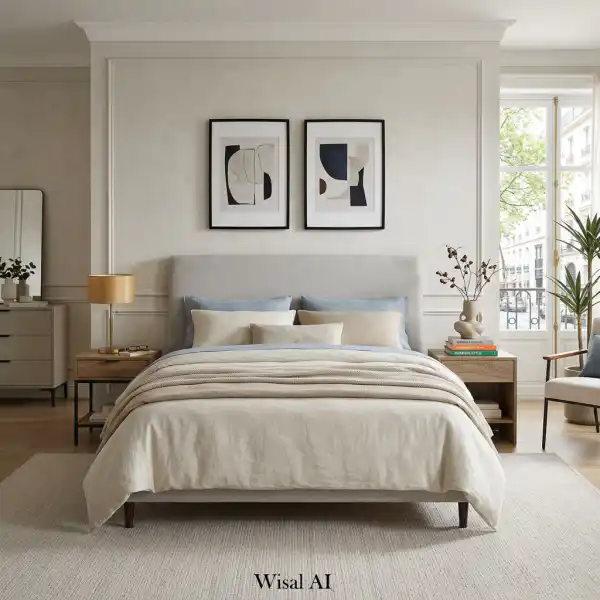
Not every calming bedroom needs to rely entirely on beige tones. Smoky gray can introduce depth while maintaining the quiet atmosphere that defines the Soft Shadow aesthetic. A soft gray upholstered headboard, paired with warm bedding and subtle lighting, creates beautiful contrast without feeling harsh. As daylight changes throughout the day, the gray surfaces catch shadows in a way that adds dimension and sophistication. This approach works particularly well in modern homes where homeowners want a moodier feel without committing to dark colors. Design Tip: Pair smoky gray with warm woods and soft cream textiles to prevent the room from feeling cold.
7. Organic Modern Bedroom with Shadowy Oak Paneling
Wall paneling is becoming increasingly popular in luxury bedrooms, but Soft Shadow interiors approach it differently. Instead of bold feature walls, vertical oak panels create subtle texture that interacts naturally with light and shadow. During the evening, indirect lighting highlights the wood grain and creates a calm architectural presence. The effect feels understated yet incredibly refined. Design Tip: Use concealed lighting above the paneling to emphasize texture after sunset.
8. Soft Shadow Bedroom with Sculptural Bedside Lighting
Lighting fixtures themselves can become part of the atmosphere. Sculptural bedside lamps with fabric shades help diffuse light gently throughout the room, creating soft gradients rather than sharp illumination. The resulting shadows feel organic and relaxing. This idea works especially well when paired with textured walls and layered bedding. Design Tip: Choose lamps with linen or fabric shades instead of exposed bulbs for a softer effect.
9. Earth-Toned Bedroom with Layered Textures
One thing many homeowners overlook is how texture influences the perception of light. A bedroom layered with boucle upholstery, linen bedding, wool throws, and natural wood creates subtle variations in how surfaces absorb and reflect light. These differences contribute to the soft, atmospheric quality that defines this trend. The room feels rich without relying on decorative excess. Design Tip: Limit the palette to three or four earthy tones for a more cohesive appearance.
10. Minimalist Bedroom with Soft Shadow Corners
Some of the most peaceful bedrooms aren't filled with furniture at all. A carefully edited room with only essential pieces allows light and shadow to become primary design elements. Empty corners, soft wall colors, and restrained styling create an atmosphere that feels spacious and calming. This approach aligns beautifully with contemporary European design principles. Design Tip: Remove unnecessary accessories and focus on quality materials instead.
11. Contemporary Bedroom with Soft Shadow Wall Niches
Architectural wall niches create natural depth and become even more dramatic when illuminated softly from within. These recessed spaces introduce dimension while allowing light to create gentle shadow patterns throughout the room. Decorative objects appear more intentional, and the overall space feels custom-designed. Design Tip: Keep niche styling minimal to maintain a calm atmosphere.
12. Soft Shadow Bedroom with Mocha and Cream Layers
Mocha continues to be one of the defining colors of 2026, and it works beautifully within a Soft Shadow palette. Combined with cream bedding and warm lighting, mocha tones create depth without overwhelming the room. The darker surfaces absorb light while lighter elements soften the overall composition. Design Tip: Mix multiple shades of mocha and beige to create subtle contrast.
13. Boutique Hotel Bedroom with Hidden Lighting
Luxury hotels often create atmosphere through lighting that isn't immediately visible. LED strips tucked behind headboards, beneath floating furniture, or within architectural details produce a soft glow that feels sophisticated and relaxing. The room feels illuminated without obvious light sources. Design Tip: Use indirect lighting wherever possible and minimize exposed bulbs.
14. Soft Shadow Bedroom Featuring Curved Furniture
Curved forms naturally soften interiors and complement the shadowy atmosphere of this design style. Rounded headboards, curved benches, and organic furniture silhouettes create gentle transitions throughout the room. Combined with warm lighting, they help eliminate harsh visual edges. Design Tip: Introduce one or two curved pieces rather than replacing every item in the room.
15. Quiet Luxury Bedroom with Stone and Linen
Natural stone and linen may seem simple, but together they create an incredibly sophisticated atmosphere. Stone introduces visual weight while linen softens the space. The contrast between the two materials creates subtle depth that becomes even more apparent under warm lighting conditions. This combination feels timeless, elegant, and grounded. Design Tip: Choose stone with natural movement and texture rather than highly polished finishes.
16. Soft Shadow Bedroom with Floating Walnut Furniture
Floating furniture creates a subtle sense of openness that works perfectly within the Soft Shadow aesthetic. A floating walnut bed frame or wall-mounted nightstands allow light to flow underneath, creating delicate shadow lines that make the room feel lighter and more spacious. The effect is modern yet incredibly calming. Warm walnut tones also help ground the space while maintaining the cozy atmosphere that defines this style. Design Tip: Install hidden LED lighting beneath floating furniture for a soft nighttime glow.
17. European-Inspired Bedroom with Shadowy Linen Drapery
European interiors often rely on natural fabrics to shape the mood of a room. Long linen drapes filter sunlight beautifully, creating soft transitions between brightness and shadow throughout the day. The gentle movement of the fabric adds life to the room while maintaining a peaceful atmosphere. Combined with neutral colors and warm wood finishes, the result feels effortless and refined. Design Tip: Choose linen curtains in warm ivory, sand, or greige tones.
18. Soft Shadow Bedroom with Dark Bronze Accents
Metal accents can enhance a shadow-inspired palette when used thoughtfully. Dark bronze lighting fixtures, hardware, and decorative details introduce contrast without feeling harsh. Their muted finish absorbs light rather than reflecting it aggressively, making them ideal for calm luxury interiors. The combination of bronze, warm wood, and soft fabrics feels sophisticated and timeless. Design Tip: Avoid overly polished metals and opt for brushed or aged finishes instead.
19. Monochromatic Bedroom with Soft Light Gradients
A monochromatic palette can be surprisingly rich when light becomes part of the design. Using multiple shades of beige, taupe, cream, or warm gray allows subtle shadows to create visual variation naturally. The room feels cohesive and tranquil without appearing flat. This approach is particularly effective in smaller bedrooms where visual simplicity enhances the feeling of space. Design Tip: Incorporate a variety of textures to prevent monochromatic palettes from feeling one-dimensional.
20. Soft Shadow Bedroom with a Velvet Headboard
Velvet naturally interacts with light in a way that creates depth and softness. A large upholstered velvet headboard becomes even more beautiful as light changes throughout the day. The fabric catches highlights and shadows differently depending on the viewing angle, adding richness to the room. Paired with neutral bedding and warm lighting, the result feels luxurious yet understated. Design Tip: Choose muted tones such as taupe, olive, mocha, or dusty beige for a timeless look.
21. Calm Luxury Bedroom with Textured Area Rugs
A large textured rug introduces warmth while helping absorb sound, making the room feel quieter and more comfortable. Natural wool rugs work especially well because they add subtle texture without distracting from the overall design. Combined with layered lighting, they contribute to the cocoon-like feeling that Soft Shadow bedrooms aim to achieve. Design Tip: Choose rugs with low-contrast patterns for a softer visual effect.
22. Soft Shadow Bedroom with Recessed Architectural Lighting
Recessed lighting is often overlooked, but when used strategically, it can transform the atmosphere of a bedroom. Instead of flooding the room with brightness, recessed lighting highlights walls, ceilings, and architectural details while preserving soft shadow zones throughout the space. The result feels sophisticated and intentionally designed. Design Tip: Use dimmers to adjust light levels throughout the evening.
23. Warm Minimalist Bedroom with Organic Materials
Minimalism feels warmer and more inviting when natural materials take center stage. Wood, linen, stone, wool, and clay-inspired finishes create subtle variations in tone and texture that work beautifully with shadow-focused interiors. The room remains uncluttered while still feeling rich and layered. Design Tip: Prioritize material quality over decorative quantity.
24. Soft Shadow Bedroom with a Cozy Reading Corner
Every luxury retreat benefits from a dedicated space to unwind. A comfortable lounge chair, soft throw, and warm floor lamp can transform an unused corner into a relaxing reading nook. The concentrated pool of light creates beautiful contrast against the darker areas of the room. This small addition often becomes one of the most-used features in the bedroom. Design Tip: Position the reading corner near a window for daytime use and natural light.
25. Ultimate Soft Shadow Bedroom Retreat with Layered Atmosphere
The final idea brings together everything that defines the Soft Shadow trend. Warm lighting, natural materials, layered textiles, muted colors, architectural details, and carefully controlled shadows work together to create a bedroom that feels restorative and deeply comfortable. Rather than relying on trends or dramatic statements, the room focuses entirely on atmosphere. Every element contributes to a sense of calm, making the space feel like a true retreat from the outside world. In a fast-moving world, this kind of bedroom offers something increasingly valuable: a place to slow down. Design Tip: Before adding a new item, ask whether it contributes to the atmosphere or simply adds visual noise.
Conclusion
Soft Shadow bedrooms are not about following a strict design formula they are about creating a feeling. A feeling of calm that stays with you long after you leave the room. In a world that constantly demands attention, these spaces offer the opposite: silence, softness, and balance. They prove that true luxury does not always need to be seen loudly it can be felt quietly through light, texture, and atmosphere. When light is controlled instead of forced, when materials are chosen for comfort instead of display, and when every detail serves a mood rather than a trend, the bedroom transforms into something more meaningful than just a place to sleep. It becomes a personal retreat designed for rest, reflection, and emotional reset. Ultimately, Soft Shadow design is not just an aesthetic choice. It is a way of designing a slower, more intentional way of living.
FAQs
1. What is a Soft Shadow bedroom design?
A Soft Shadow bedroom focuses on creating calm and depth through controlled lighting, muted colors, and natural materials. It avoids harsh contrasts and instead builds a layered, atmospheric space.
2. Why is Soft Shadow design becoming popular in 2026?
Because people are looking for more calming and restorative home environments. Soft Shadow interiors reduce visual noise and support relaxation, especially in bedrooms.
3. What colors work best for a Soft Shadow bedroom?
Warm neutrals like beige, taupe, ivory, sand, greige, and soft brown tones work best. These colors help create smooth transitions between light and shadow.
4. How can I achieve Soft Shadow lighting?
Use layered lighting such as bedside lamps, hidden LED strips, recessed lighting, and dimmers. Avoid strong overhead lighting and focus on warm, diffused light sources.
5. Do Soft Shadow bedrooms require expensive furniture?
No. The style is more about atmosphere than cost. Even simple furniture can look luxurious when combined with good lighting, textures, and color harmony.
6. What materials are commonly used in this style?
Natural materials like wood, linen, wool, stone, and matte metal finishes are commonly used because they interact beautifully with soft lighting.