A well-designed kitchen does much more than look beautiful—it makes every meal easier to prepare, every ingredient easier to find, and every daily routine more enjoyable. Whether you're making a quick breakfast before work or preparing a large family dinner, the way your kitchen is designed directly affects how efficiently you move, cook, clean, and organize your space. Many homeowners focus on cabinet colors, countertops, or trendy finishes when planning a kitchen. While these choices certainly influence the room's appearance, professional designers know that functionality should always come first. A kitchen that supports your daily habits will remain enjoyable to use long after decorating trends have changed. Good kitchen design is built around practical principles. Smart layouts reduce unnecessary movement, organized storage keeps essential tools within reach, proper lighting improves visibility, and durable materials simplify maintenance. When these elements work together, cooking becomes smoother, faster, and far less stressful. Fortunately, you don't need a complete renovation to improve the functionality of your kitchen. Small changes—such as reorganizing storage, improving task lighting, adjusting appliance placement, or creating dedicated work zones—can dramatically improve how the space performs every single day. Professional designers often say that the best kitchens are almost invisible in use. Everything feels natural because every cabinet, drawer, appliance, and countertop has been carefully planned around real-life routines rather than appearance alone. In this guide, you'll discover 15 kitchen design rules that make cooking easier. These timeless principles combine organization, efficiency, and thoughtful design to help you create a kitchen that's not only beautiful but also practical enough to simplify everyday life.
1. Design Around the Kitchen Work Triangle
One of the most important principles in kitchen design is the classic work triangle. This concept connects the three primary work areas: the refrigerator, the sink, and the cooking surface. Keeping these areas within comfortable walking distance reduces unnecessary movement while preparing meals. Professional designers aim to create smooth circulation between these three points without placing obstacles in the way. The goal isn't necessarily to make the triangle as small as possible, but to ensure movement feels natural and uninterrupted. A well-planned work triangle improves efficiency whether you're cooking alone or with family members.
2. Create Separate Work Zones
Beyond the traditional work triangle, modern kitchens benefit from dedicated activity zones. Organize your kitchen into preparation, cooking, cleaning, serving, and food storage areas. Store knives, cutting boards, and mixing bowls near preparation surfaces. Keep cookware close to the stove. Place dishes and glasses near the dishwasher for faster unloading. Organize pantry items near food preparation areas for easier access while cooking. Grouping related items together reduces unnecessary searching and helps every task flow naturally from one step to the next.
3. Prioritize Countertop Workspace
Countertops are among the most valuable areas in any kitchen. No matter how beautiful the cabinetry may be, limited preparation space quickly becomes frustrating. Professional designers intentionally preserve generous countertop areas between the sink and stove because this is where most food preparation takes place. Avoid permanently filling countertops with decorative accessories or appliances that aren't used daily. Open workspace makes cooking faster while allowing the kitchen to feel cleaner and more spacious.
4. Store Everyday Items Within Easy Reach
Think about everything you use every single day. Cooking oils, spices, utensils, coffee supplies, plates, glasses, and frequently used cookware should all remain within comfortable reach. Reserve higher shelves for seasonal serving dishes or appliances used only occasionally. Heavy pots and pans belong in lower drawers rather than upper cabinets where lifting becomes more difficult. Professional kitchen organization always follows daily habits rather than simply filling available cabinet space. This simple rule reduces unnecessary movement throughout the day.
5. Use Deep Drawers Instead of Lower Cabinets
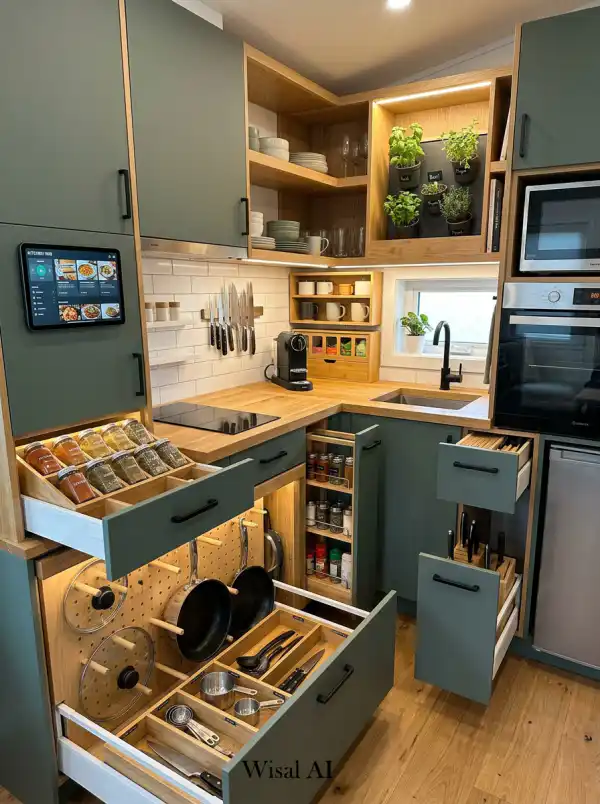
Deep drawers have become one of the defining features of modern kitchen design. Unlike traditional cabinets where items become hidden in the back, drawers allow everything to remain visible and easily accessible. Large cookware, mixing bowls, food containers, baking trays, and small appliances are much easier to organize inside wide drawers. Drawer dividers further improve organization while preventing clutter from developing over time. Professional designers increasingly replace lower cabinets with drawers because they're more ergonomic and significantly easier to use during everyday cooking.
6. Plan Storage Before Buying Accessories
Many homeowners purchase storage baskets, organizers, and containers after the kitchen is finished, hoping they'll solve clutter. Professional designers take the opposite approach—they plan storage before choosing decorative accessories. Begin by evaluating everything your kitchen needs to hold, from cookware and pantry items to small appliances and cleaning supplies. Once you understand your storage requirements, you can assign a dedicated place for every category. Use pull-out pantry shelves, drawer dividers, tray organizers, vertical baking sheet storage, spice pull-outs, and corner cabinet systems to maximize every inch of available space. The goal isn't simply to create more storage, but to make every item easy to find and easy to return after use. A kitchen where everything has a designated home naturally stays cleaner, more organized, and much easier to cook in.
7. Layer Your Kitchen Lighting
Lighting is one of the most underestimated elements of kitchen design. Many kitchens rely solely on a central ceiling fixture, leaving work surfaces covered in shadows. Professional designers always combine multiple layers of lighting. Ambient lighting provides general brightness, task lighting illuminates food preparation areas, under-cabinet lighting brightens countertops, and pendant lights define islands or breakfast bars. Good lighting improves safety while making everyday cooking far more enjoyable. It also highlights textures, cabinetry, and natural materials, making the entire kitchen feel warmer and more inviting. The ability to adjust lighting for different times of day adds another level of comfort that many homeowners overlook.
8. Keep Walkways Open and Comfortable
An efficient kitchen should allow people to move naturally without constantly stepping around obstacles. Leave generous space between countertops, islands, dining furniture, and appliances. Avoid placing trash bins, stools, carts, or decorative pieces where they interrupt circulation. If more than one person cooks at the same time, comfortable walkways become even more important. Professional kitchen layouts prioritize movement just as much as storage. An open circulation path reduces stress, increases safety, and helps multiple tasks happen simultaneously without feeling crowded. The easier it is to move through the kitchen, the easier it becomes to enjoy using it every day.
9. Choose Materials That Are Easy to Maintain
A beautiful kitchen should remain beautiful after years of daily use. Select materials that resist stains, moisture, scratches, and everyday wear. Quartz countertops continue to be one of the most popular choices because they combine durability with low maintenance. Large-format backsplash tiles reduce grout lines, making cleaning significantly easier. Cabinet finishes that resist fingerprints and high-quality flooring that handles spills well also simplify daily upkeep. Professional designers know that practical materials often create a more luxurious experience because they require less effort to maintain. Instead of constantly worrying about damage, you can simply enjoy using your kitchen.
10. Make the Most of Vertical Space
Walls offer valuable storage opportunities that many kitchens fail to use effectively. Install upper cabinets that extend toward the ceiling whenever possible to maximize storage while creating a more custom appearance. Floating shelves, magnetic knife strips, hanging rails, wall-mounted utensil organizers, and tall pantry cabinets all help free up countertop space. Vertical storage also keeps frequently used tools within easy reach while maintaining a cleaner overall appearance. Using wall space wisely makes even compact kitchens feel larger, more organized, and considerably more functional.
11. Keep Appliances Close to Where They're Used
One of the simplest ways to improve efficiency is to position appliances according to your daily routine. Store the coffee maker near mugs and coffee supplies. Place the toaster close to the bread drawer. Keep mixing appliances near baking ingredients. Position trash and recycling bins near preparation areas rather than across the room. Professional designers carefully study how people actually cook before determining appliance placement. When every appliance is located exactly where it's needed, cooking becomes noticeably faster and more enjoyable.
12. Incorporate Hidden Organization
A clean-looking kitchen is often the result of excellent hidden organization. Instead of displaying every utensil, appliance, or pantry item, use drawer organizers, pull-out bins, concealed recycling systems, appliance garages, and cabinet inserts. These hidden storage solutions maintain the kitchen's visual simplicity while making everyday tasks much more convenient. Professional designers understand that less visual clutter creates a calmer environment. An organized kitchen doesn't just look better—it also helps reduce stress during busy mornings and family dinners.
13. Design for More Than One Cook
Many kitchens are designed as though only one person will ever use them. In reality, families often prepare meals together. If possible, leave enough preparation space for multiple people to work comfortably. Separate cooking and preparation zones help prevent traffic jams near the stove. Double sinks, larger islands, and wider walkways further improve teamwork during meal preparation. A kitchen that supports multiple users feels significantly more comfortable during gatherings and holiday cooking. Planning for shared use makes the space more flexible throughout the year.
14. Keep the Design Simple and Consistent
Complicated kitchens often become visually overwhelming. Professional designers usually limit the number of colors, materials, and finishes used throughout the room. Consistent cabinetry, coordinated hardware, neutral surfaces, and repeated materials create visual harmony. Instead of filling every corner with decorative objects, allow beautiful materials and thoughtful organization to become the primary design features. Simple kitchens are easier to clean, easier to update, and far less likely to feel outdated. Timeless design always prioritizes balance over excess.
15. Design Around Your Daily Routine
The most important kitchen design rule has nothing to do with trends. It begins by understanding how you actually live. Think about the meals you prepare most often, where family members naturally gather, how much storage you truly need, and which daily tasks feel inconvenient. A family that cooks every evening will have very different priorities than someone who mainly prepares quick breakfasts and occasional dinners. Professional designers always tailor kitchens to individual lifestyles instead of copying showroom layouts. When your kitchen reflects your own habits, every movement feels more intuitive. That's the true secret behind kitchens that remain enjoyable for many years.
Conclusion
A successful kitchen is one that supports the way you live every day. While attractive finishes and stylish décor certainly enhance the room, the true measure of great kitchen design is how effortlessly it functions. Thoughtful layouts, organized storage, layered lighting, durable materials, and practical work zones all contribute to a space that simplifies cooking rather than complicating it. Many of the most effective improvements require surprisingly little investment. Reorganizing storage, improving lighting, creating dedicated work areas, and maximizing vertical space can significantly increase efficiency without changing the entire kitchen. These practical decisions not only save time but also reduce stress, making meal preparation more enjoyable for everyone in the household. Ultimately, the best kitchen isn't the one that follows every trend it's the one that works beautifully for your daily routine. By applying these 15 kitchen design rules, you can create a space that feels organized, comfortable, timeless, and perfectly suited to making cooking easier every single day.
FAQs
1. What is the most important kitchen design rule?
Designing around the work triangle between the sink, refrigerator, and cooktop remains one of the most effective ways to improve kitchen efficiency.
2. How can I make cooking easier in a small kitchen?
Use vertical storage, keep countertops clear, organize items by task, install deep drawers, and maximize natural light to improve both function and comfort.
3. Why do professional designers prefer deep drawers?
Deep drawers provide better visibility, easier access, improved organization, and greater comfort than traditional lower cabinets.
4. What lighting works best in a kitchen?
A combination of ambient, task, under-cabinet, and accent lighting provides the best balance between functionality and atmosphere.
5. Which materials require the least maintenance?
Quartz countertops, porcelain tiles, satin-finish cabinets, and fingerprint-resistant appliances are among the easiest materials to maintain.
6. How do I keep my kitchen organized every day?
Assign every item a dedicated storage location, organize supplies by activity, minimize countertop clutter, and regularly return items to their designated places after use.