I’ve always believed that the bedroom is the only space in the home where design is not just about how things look but about how you feel at the end of the day. There was a time when I used to underestimate color choices in bedrooms. I thought furniture and lighting were the most important parts. But everything changed the moment I stayed in a bedroom designed in soft, calming shades of blue during a short trip. It didn’t feel “decorated”, it felt quiet, balanced, and surprisingly emotional in a way I didn’t expect. What stood out wasn’t just the color itself, but how the entire space worked together. The soft blue walls made the room feel cooler and more peaceful. The warm lighting at night made everything feel safe and cozy. Even simple details like the bedding texture and curtain movement changed the mood completely. That experience made me realize something important: Blue is not just a design choice, it’s a feeling. In this guide, we’re not just talking about decorating a bedroom with blue. We’re talking about how to build a real atmosphere—one that helps you sleep better, wake up calmer, and actually enjoy being in your own space. Whether you like soft pastel tones, deep navy elegance, or modern minimal styles, I’ll walk you through how to use blue in a way that feels natural, comfortable, and genuinely luxurious—not forced or overly styled. Because a truly beautiful bedroom isn’t the one that looks perfect in pictures… it’s the one that feels right when you close the door and the world gets quiet.
1. Choose the Right Shade of Blue for the Mood You Want
The foundation of any blue bedroom starts with selecting the right shade, because not all blues create the same emotional effect. Lighter blues such as sky blue or powder blue tend to feel airy, soft, and calming, making them perfect for creating a peaceful sleep environment. These shades work especially well in smaller bedrooms because they visually expand the space and reflect natural light beautifully. On the other hand, deeper shades like navy blue, midnight blue, or indigo introduce a sense of depth, drama, and luxury. These darker tones create a cocoon-like atmosphere that feels intimate and sophisticated, especially when paired with warm lighting and soft textures. Muted or dusty blues are a balanced option for those who want something modern yet subtle. They are less intense than bright blues and more refined than very dark tones, making them ideal for contemporary and minimalist interiors. Choosing the right shade sets the emotional tone for the entire room, so it is important to think about how you want to feel in the space—calm and light, cozy and enclosed, or elegant and dramatic. Design Tips: Light blue = airy and relaxing Navy blue = cozy and luxurious Muted blue = modern and balanced Test colors in natural light Match shade with room size and lighting
2. Create a Cozy Blue Bedroom with Layered Textures
Color alone is not enough to create a cozy bedroom—texture is what brings the space to life. In a blue bedroom, layering different materials helps soften the overall look and makes the space feel warm and inviting rather than cold or flat. Start with bedding as the foundation. Soft cotton sheets, linen duvet covers, and plush blankets in varying shades of blue create depth and visual interest. Adding accent pillows in complementary tones like white, beige, or gray helps balance the color palette while enhancing comfort. Rugs also play a major role in creating coziness. A soft area rug under the bed adds warmth and makes the space feel more grounded. Curtains in light, flowing fabrics can further soften the room and add a sense of movement. The goal is to create a layered environment where every surface feels comfortable and visually rich, without overwhelming the calming effect of blue. Design Tips: Layer different fabrics and materials Mix shades of blue with neutrals Use soft rugs for warmth Add curtains for softness Prioritize comfort in bedding
3. Add Luxury with Deep Blue and Metallic Accents
If you want your blue bedroom to feel luxurious, pairing deep blue tones with metallic accents is one of the most effective design strategies. Navy or royal blue creates a rich, elegant base that instantly feels high-end when combined with gold, brass, or silver details. Metallic elements can be introduced through lighting fixtures, bedside lamps, drawer handles, mirrors, or decorative accessories. These reflective surfaces catch the light and add a subtle glow that enhances the overall sophistication of the room. To avoid making the space feel too heavy, it is important to balance dark blue tones with lighter elements such as white bedding or neutral walls. This contrast ensures the room feels elegant rather than overwhelming. The combination of deep blue and metallic finishes creates a hotel-like atmosphere that feels refined, polished, and intentionally designed. Design Tips: Use navy or deep blue as a base Add gold or brass accents Balance with light neutral colors Use reflective surfaces strategically Keep decor elegant and minimal
4. Bring Calmness with Natural Light and Soft Blue Tones
Natural light plays a crucial role in how blue is perceived in a bedroom. Soft blue tones become even more calming and airy when paired with daylight, creating a refreshing and peaceful environment throughout the day. Large windows, sheer curtains, and open layouts help maximize natural light, making the room feel brighter and more spacious. In the morning, soft blue walls reflect light gently, creating a soothing atmosphere that supports a calm start to the day. To enhance this effect, avoid blocking natural light with heavy furniture or dark window coverings. Instead, opt for light fabrics and minimal window treatments that allow sunlight to flow freely. This approach works especially well in smaller bedrooms where maximizing light can make the space feel significantly larger and more open. Design Tips: Use sheer or light curtains Avoid blocking windows Choose soft blue shades Maximize natural daylight Keep window areas uncluttered
5. Balance Blue with Warm Natural Materials
While blue is naturally cool in tone, pairing it with warm natural materials helps create balance and prevents the space from feeling too cold or sterile. Wood, rattan, linen, and stone elements introduce warmth and texture that complement blue beautifully. Wooden furniture such as bed frames, nightstands, or flooring adds an organic feel that grounds the room. Light oak or walnut tones work especially well because they contrast gently with blue without overpowering it. Natural materials also bring a sense of authenticity and comfort, making the bedroom feel more lived-in and inviting. This combination of cool and warm elements creates a balanced environment that feels both relaxing and visually rich. The result is a bedroom that feels calm like water but warm like nature—a perfect combination for rest and relaxation. Design Tips: Use natural wood furniture Add rattan or woven accents Balance cool and warm tones Keep textures organic Avoid overly synthetic materials
6. Create a Minimal Blue Bedroom for a Clean, Peaceful Look
A minimalist blue bedroom focuses on simplicity, clarity, and emotional calmness. Instead of filling the space with decorative elements, this style relies on clean lines, open space, and carefully chosen essentials that create a sense of order and relaxation. Blue works perfectly in minimal design because it already carries a calming psychological effect. When paired with a restrained layout, it helps the room feel even more peaceful and uncluttered. Light or muted blue shades are often preferred here because they maintain brightness while still adding personality to the space. Furniture in a minimal blue bedroom should be functional and visually light. Low-profile beds, simple nightstands, and hidden storage solutions help reduce visual noise. The goal is to create a space where nothing feels unnecessary, and every element has a purpose. This type of design is especially effective for people who want a bedroom that helps them mentally disconnect, reduce stress, and enjoy a clearer environment before sleep. Design Tips: Use soft or muted blue shades Keep furniture minimal and functional Avoid unnecessary decor Maintain open, breathable space Focus on visual clarity and simplicity
7. Coastal Blue Bedroom Inspired by the Sea
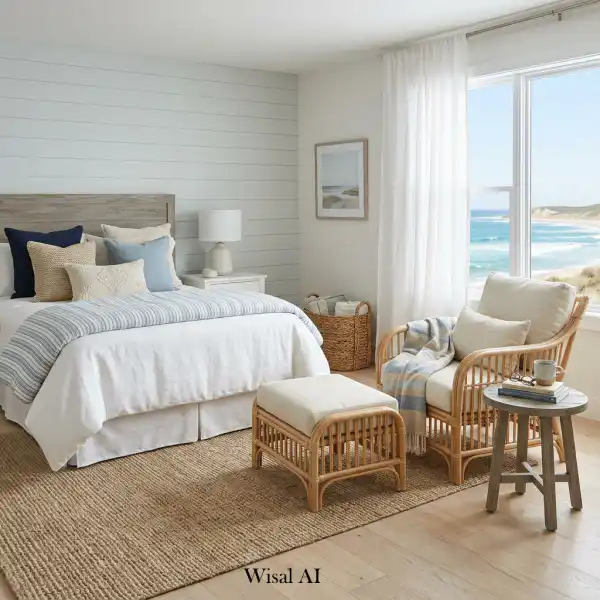
A coastal blue bedroom brings the calming energy of the ocean directly into your home. This design style is inspired by seaside landscapes, combining soft blues, sandy neutrals, and airy whites to create a fresh and relaxing environment. The feeling of this space is light, breezy, and natural. It often uses textures like linen, cotton, and light wood to replicate the relaxed atmosphere of beachside living. The color palette is intentionally soft, avoiding harsh contrasts to maintain a soothing flow throughout the room. Decorative elements such as seashell-inspired accessories, woven baskets, and driftwood-style furniture can subtly enhance the coastal theme without making it feel overly themed or artificial. The result is a bedroom that feels like a permanent vacation—calm, refreshing, and deeply relaxing. Design Tips: Use soft ocean-inspired blues Combine with white and sand tones Add natural linen fabrics Keep decor light and minimal Focus on airy, open feeling
8. Cozy Blue Bedroom with Warm Lighting Atmosphere
Lighting has a powerful impact on how blue is perceived in a bedroom. While blue is naturally cool, warm lighting can transform it into a cozy and inviting space, especially in the evening. Soft warm bulbs, bedside lamps, and indirect lighting help balance the coolness of blue and create a gentle glow that feels comforting. Instead of bright overhead lighting, layered lighting sources should be used to build depth and atmosphere. This approach is particularly effective in deep blue bedrooms, where lighting plays a key role in preventing the space from feeling too dark or heavy. The combination of warm light and blue tones creates a cocoon-like environment that feels perfect for rest and relaxation. A well-lit blue bedroom becomes not just a place to sleep, but a calming retreat at the end of the day. Design Tips: Use warm white lighting only Add bedside lamps for softness Avoid harsh overhead lights Layer multiple light sources Create a gentle evening glow
9. Elegant Dark Blue Bedroom with Luxury Vibes
Dark blue bedrooms are one of the most powerful ways to achieve a luxurious and sophisticated interior. Shades like navy, midnight blue, or deep indigo create a dramatic backdrop that feels rich and refined. When combined with high-quality materials such as velvet, marble, or polished wood, the space immediately takes on a high-end hotel-like atmosphere. Metallic accents in gold, brass, or black further enhance the sense of elegance. However, balance is essential. Without lighter elements, a dark blue bedroom can feel heavy. Introducing neutral bedding, soft lighting, and reflective surfaces helps maintain visual harmony. This style is ideal for those who want a bold yet calming bedroom that feels both intimate and luxurious. Design Tips: Use deep navy or indigo tones Add metallic or glass accents Balance with lighter textiles Use luxurious materials Keep design intentional and refined
10. Soft Blue Bedroom for a Light and Airy Feel
A soft blue bedroom focuses on creating an airy, refreshing atmosphere that feels light and open. This style works especially well in small bedrooms or spaces with limited natural light because soft blue visually expands the room. When paired with white walls, light furniture, and minimal decor, soft blue creates a peaceful environment that feels almost cloud-like. It reflects daylight beautifully, making the space feel brighter throughout the day. This design is ideal for people who prefer calm, gentle interiors that support relaxation without overwhelming the senses. Design Tips: Use pastel or sky blue tones Combine with white or beige Keep furniture light and simple Maximize natural light Avoid heavy visual elements
11. Blue Bedroom with Natural Wood Harmony
Blue and wood together create one of the most balanced and timeless interior combinations. While blue introduces calmness and freshness, wood adds warmth, grounding, and natural character. This combination works in almost every design style—from modern to Scandinavian to rustic. Wooden bed frames, nightstands, or flooring soften the coolness of blue and make the bedroom feel more welcoming. The contrast between cool and warm tones creates a visually interesting space that still feels cohesive and peaceful. It is especially effective for creating a bedroom that feels both stylish and comfortable. Design Tips: Use light or medium wood tones Pair with soft blue shades Keep materials natural Avoid overly glossy finishes Focus on balance and warmth
12. Luxury Blue Bedroom with Hotel-Inspired Design
A luxury blue bedroom inspired by high-end hotels focuses on elegance, comfort, and attention to detail. This style is all about creating a space that feels polished and intentionally designed, like a five-star suite you never want to leave. Deep blue tones such as navy or royal blue are often used as the foundation, paired with soft neutrals and premium materials like velvet, silk, marble, and polished wood. These textures immediately elevate the space and add a sense of richness. The bed becomes the focal point of the room, often styled with layered bedding, plush pillows, and a structured headboard. Lighting is soft and controlled, designed to create a warm and inviting glow rather than harsh brightness. This type of bedroom is ideal for people who want their space to feel both relaxing and sophisticated, combining comfort with a strong visual impact. Design Tips: Use deep blue as the main tone Add luxurious textures like velvet or silk Keep furniture elegant and structured Use warm ambient lighting Focus on symmetry and balance
13. Blue Bedroom with Mood Lighting Ambiance
Lighting can completely transform how blue appears in a bedroom. A mood lighting approach uses layered light sources to create depth, warmth, and emotional atmosphere throughout the space. Instead of relying on a single overhead light, this design uses bedside lamps, LED strips, wall sconces, and indirect lighting to build a soft, glowing environment. This enhances the calming nature of blue and makes the room feel more dynamic at night. Dark blue tones especially benefit from this approach, as lighting prevents the space from feeling too heavy or closed in. The combination of soft illumination and blue surfaces creates a relaxing environment perfect for unwinding. This style works well for modern bedrooms where atmosphere is just as important as functionality. Design Tips: Use multiple light sources Add soft LED lighting accents Avoid harsh overhead lighting Highlight walls and textures Create layered lighting depth
14. Blue Bedroom with Indoor Plants and Natural Energy
Adding plants to a blue bedroom introduces a refreshing natural contrast that enhances both color and mood. Greenery softens the coolness of blue and brings life, freshness, and movement into the space. This combination works particularly well in modern and minimalist interiors where the goal is to keep the room calm but not lifeless. Plants like snake plants, pothos, and peace lilies are often used because they are easy to maintain and visually appealing. The presence of greenery also improves the emotional quality of the room, making it feel more alive and connected to nature. When combined with soft blue tones, the result is a balanced and peaceful sanctuary. Design Tips: Add low-maintenance indoor plants Combine green with soft blue tones Use natural pots and planters Avoid overcrowding the space Keep balance between color and nature
15. Calm Blue Bedroom Designed for Better Sleep
A sleep-focused blue bedroom is designed specifically to improve rest quality and reduce stress. Blue is already known for its calming psychological effects, making it one of the best colors for sleep environments. This design prioritizes simplicity, comfort, and minimal stimulation. Soft blue walls, blackout curtains, and comfortable bedding help create an environment that signals the brain to relax and unwind. Technology is often minimized in this style to reduce distractions. Instead, the focus is on creating a peaceful, distraction-free zone where the body and mind can fully rest. This approach is ideal for people who struggle with sleep or want to improve their nighttime routine. Design Tips: Use calming light blue shades Reduce visual clutter Add blackout curtains Keep electronics minimal Focus on sleep comfort
16. Blue Bedroom with Scandinavian Minimal Warmth
A Scandinavian-inspired blue bedroom blends simplicity with warmth and functionality. This style uses clean design principles while maintaining a cozy and inviting atmosphere. Light blue tones are often combined with natural wood, soft textiles, and neutral colors to create a balanced and harmonious environment. The design avoids excess decoration and instead focuses on functional beauty. The result is a bedroom that feels both modern and comfortable, with a strong sense of calm organization. Every element has a purpose, and nothing feels unnecessary or overwhelming. This is one of the most practical and timeless ways to design a blue bedroom. Design Tips: Combine blue with light wood tones Use minimal but cozy decor Keep furniture functional Focus on natural textures Maintain clean visual structure
17. Ultimate Dream Blue Bedroom Sanctuary
The ultimate blue bedroom sanctuary brings together all the best elements of design into one complete, personal retreat. It is not defined by a single style but by a combination of comfort, emotion, and personal expression. Here, different shades of blue are layered with soft lighting, natural textures, plants, and comfortable furniture to create a fully immersive environment. Every detail works together to support relaxation, calmness, and emotional well-being. This space is designed to adapt to your lifestyle—whether you want to sleep, relax, read, or simply disconnect from the outside world. It becomes a personal escape that reflects who you are and how you want to feel. The true power of a dream bedroom is not perfection, but harmony. A space that feels balanced, peaceful, and deeply personal will always feel luxurious in its own way. Design Tips: Combine multiple design elements naturally Focus on emotional comfort Use blue as the central theme Add personal touches Prioritize harmony over perfection
Conclusion
Designing a blue bedroom is not just about choosing a color—it’s about creating a feeling that stays with you every time you enter the room. Blue has a rare ability to balance calmness with elegance, making it one of the most powerful choices for sleep-focused interior design. Throughout these 17 ideas, we explored how different shades of blue can completely change the mood of a space—from soft and airy pastels that open up the room, to deep navy tones that create a sense of luxury and intimacy. When combined with the right lighting, textures, and natural materials, blue becomes more than a visual choice; it becomes an emotional experience. The key to a successful blue bedroom is balance. Too much cool tone can feel flat, while too many heavy elements can feel overwhelming. But when everything is layered thoughtfully—light, fabric, wood, and color—you get a space that feels calm, cozy, and deeply personal. At the end of the day, your bedroom should feel like a place where your mind slows down and your body fully relaxes. A well-designed blue bedroom does exactly that—it turns everyday sleep into a peaceful ritual.
FAQ
1. Is blue a good color for a bedroom?
Yes, blue is one of the best colors for bedrooms because it promotes calmness, reduces stress, and supports better sleep quality.
2. What shade of blue is best for a bedroom?
Light blue creates a soft and airy feel, while navy blue adds luxury and depth. Muted blue is ideal for modern and balanced interiors.
3. Does blue make a bedroom feel cold?
It can if used alone, but pairing blue with warm lighting, wood textures, and soft fabrics creates a cozy and balanced atmosphere.
4. What colors go well with a blue bedroom?
White, beige, gray, natural wood tones, gold accents, and soft green plants all work beautifully with blue.
5. How can I make a blue bedroom feel more luxurious?
Use deep blue tones, add metallic accents like gold or brass, layer textures like velvet or linen, and incorporate warm ambient lighting.