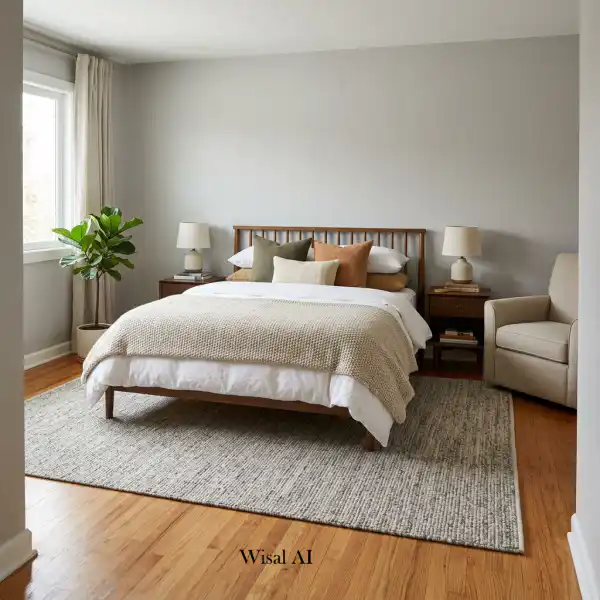
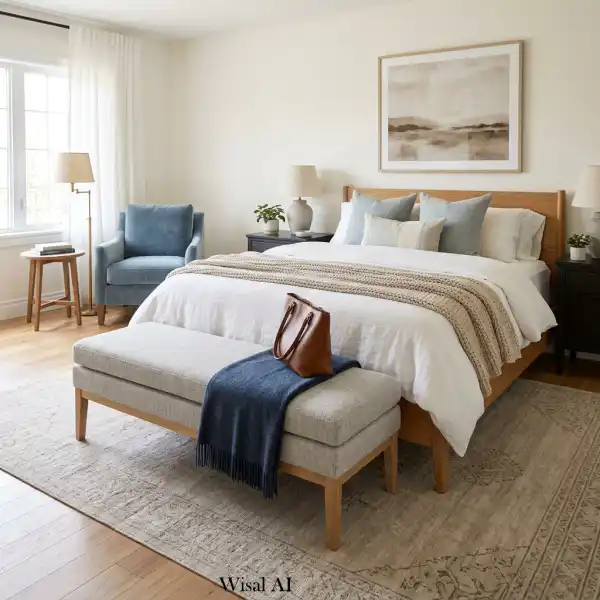
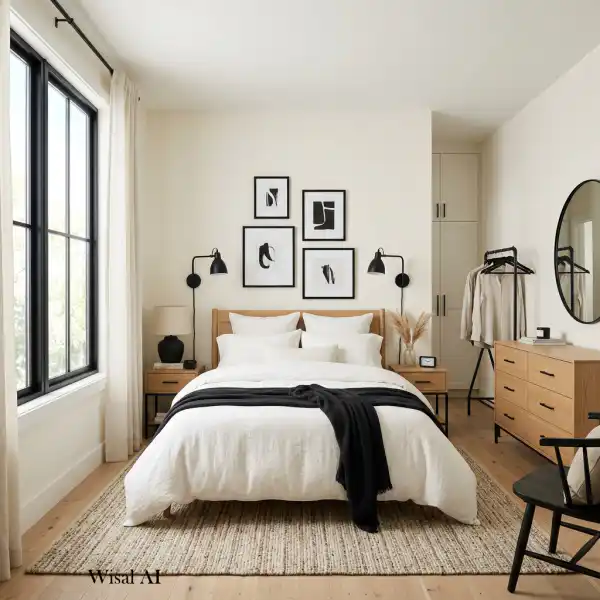
Nobody talks about bedroom lighting until the room feels wrong. You spend months on the furniture, the rug, the bedding. Then you switch the overhead off one evening and the room still feels flat. Cold when it should be warm. Dead at 9pm. This is a lighting problem. Almost always. I have been in rooms with cheap furniture that felt genuinely luxurious after dark because the bedroom lighting was layered and warm. And I have been in rooms with beautiful expensive pieces that felt wrong the moment the sun went down because someone installed one recessed downlight and called it finished.
In 2026, layered bedroom lighting has become the primary design decision, not a finishing touch. The direction is away from the single central fixture toward warm, dimmable, multi-source schemes that shift atmosphere throughout the evening. These 20 ideas cover everything from bedside lighting and ambient bedroom lighting to LED strip ideas and atmosphere lighting that costs almost nothing. Some of these are expensive. Most are not. All of them will change how the room feels after dark more than any paint color or new furniture could.
The One Thing Before We Start
Every bulb in your bedroom should be 2700K or lower. Not 3000K. Not 4000K. 2700K. The difference between 2700K and 4000K in a bedroom at 9pm is the difference between a room that tells your nervous system to slow down and a room that tells it to stay alert. This is not an aesthetic preference. It is how photoreceptors in the human eye work in response to different color temperatures. If you do nothing else from this article, change the bulbs. Tonight. It will cost less than a lamp and do more than a new rug.
Part 1: The Ambient Layer
The ambient layer is the foundation. It fills the room with enough light to function, but in a bedroom it should be soft, warm, and dimmable. The goal is never full brightness. The goal is the right brightness for the moment.
1.Dimmer Switch Bedroom Lighting Upgrade
Most bedrooms have one option: full brightness or off. Those are bad options for a room where atmosphere matters. A dimmer on every circuit costs almost nothing and changes how every other fixture in the room performs. The pendant that felt too harsh becomes exactly right at 40 percent. I have installed dimmers in bedrooms and had clients call the next week saying the room feels completely different. Nothing else changed. Get a dimmer on every switch before you buy any new fixture. That is the correct order of operations. Wireless smart dimmers like Lutron Caseta install in minutes with no electrician needed.
2.Low Profile Pendant Bedroom Lighting
Recessed downlights are the most common bedroom ceiling fixture and almost always wrong. They point directly at faces, create unflattering shadows, and blast the room at full brightness when the last thing you need is full brightness. A pendant or semi-flush fixture with a diffuser distributes light softly in all directions. On a dimmer it becomes the ambient bedroom lighting foundation rather than an interrogation light. Proportions matter: diameter should be roughly half the bed width. Above a queen bed, 45 to 55 centimeters. I used a recessed grid early in my career because the client asked. At night it looked like a changing room. I would not make that call again.
3.Cove Lighting for Bedroom Ceiling
A concealed LED strip in a shallow ceiling recess washes light upward across the ceiling rather than pointing it down. You never see the source. The room simply glows. This is why luxury hotel bedrooms feel the way they do. At 2700K on a dimmer, bedroom cove lighting goes from a soft evening wash to almost nothing, creating an atmosphere that encourages sleep rather than fighting it. The one detail that matters: minimum 8 centimeters reveal depth so the strip stays invisible at normal ceiling angles.
4.Paper Lantern Bedroom Lighting Idea
Light through paper is softer than fabric, more diffused than frosted glass, and it moves slightly with air currents. That movement is almost imperceptible. It registers anyway. An Akari-style lantern hung 60 to 70 centimeters above the mattress, 45 to 60 centimeters in diameter, creates a circle of warm amber light centered on the bed. The ceiling recedes into shadow. The room has a center of warmth around the place where sleep happens. This is not a budget compromise. It is one of the most architecturally considered bedroom lighting decisions available.
Part 2: The Task Layer
Task lighting in a bedroom is primarily bedside reading light. Most bedrooms do this badly: too bright, wrong position, no dimming, the wrong color temperature. Getting it right is one of the more immediate quality of life improvements available in any bedroom.
5.Wall Sconce Bedroom Task Lighting
Swing arm sconces free the nightstand surface, allow precise reading angle adjustment, and look more architecturally intentional than a lamp sitting on a table. Mounting height: shade center at 80 to 100 centimeters from floor, level with shoulder height when sitting upright in bed. Too low and the light shines in your eyes. Choose an opaque directional shade, not a diffuser. Reading light is directional. Ambient light is soft. Different functions, different fixtures.
6.Pendant Bedside Bedroom Lighting
Bedside pendants hung from the ceiling have been standard in hotel rooms for years. They do what sconces do: clear the nightstand surface and look deliberate. The pendant bottom edge should sit at 80 to 90 centimeters from the floor. Two things matter: its own circuit separate from ambient lighting, and clean cord management. A cable hanging diagonally from a ceiling plug looks provisional. It needs proper installation to look like a decision.
7.Ceiling Reading Light for Bedroom
In a full renovation, recessed adjustable spotlights positioned 60 centimeters from the wall and angled at 30 degrees toward the pillow zone handle reading light without a single visible fixture on the bedhead wall. The wall is completely clean. No sconces, no pendants, no cables. The light appears from nowhere. This is not a retrofit option, it requires ceiling work. But when a bedroom is being built from scratch, it is the most resolved solution available.
Part 3: The Accent and Atmosphere Layer
This is where most bedrooms have the most room to improve and where the investment required is lowest. Accent and atmosphere lighting creates the pockets of warmth and visual interest that make a room feel designed after dark.
8.Headboard LED Bedroom Lighting Strip
A 2700K LED strip concealed in a diffuser channel behind the headboard washes the wall above in warm amber and casts a glow downward onto the bedding. The bed floats in a halo of light. The headboard wall becomes the room's visual center. I have installed this in three bedrooms. Each time, the client sits on the edge of the bed, looks at the wall, and says "it looks like a hotel." It does. The good hotels have been doing this for thirty years. Cost: around the price of a cushion.
9.Shelf LED Accent Bedroom Lighting
A 2700K LED strip at the back of floating shelves back-lights the objects on them rather than front-lighting from above. Ceramics, books, and plants become more dimensional. The shelf reads as an atmospheric element rather than storage. The objects look completely different back-lit. More considered. More present. This is one of the least expensive bedroom lighting additions with one of the most noticeable effects.
10.Corner Floor Lamp Bedroom Idea
A floor lamp in a bedroom corner occupies dead space with intention and creates a secondary warm zone so the room reads as having multiple areas of light rather than one bright center with dark edges. The shade: opaque at the bottom, semi-translucent at the top. Light goes down onto the floor and lower walls with a soft upward glow. The lamp reads as warm and present without flooding the room. One floor lamp in one corner changes the spatial reading of the entire room after dark.
11.Candlelight Bedroom Atmosphere Lighting
Candle light is around 1800K and it flickers. The flicker is the thing no LED replicates precisely. The light is alive in a way electric sources are not. Two candles in glass vessels on the nightstands plus one on the dresser, combined with dimmed electric sources, adds a layer of atmosphere that costs almost nothing. This is not a design suggestion. It is a reminder that candles existed for thousands of years for good reason.
12.Table Lamp Bedroom Design Guide
A table lamp works when the bottom of the shade sits level with the top of the mattress, around 55 to 65 centimeters total lamp height for a standard bed, with a shade wider than the base diameter, a 2700K bulb, and no matching partner across the bed. Two identical lamps bought as a set and placed symmetrically look like a furniture showroom. Two related but different lamps chosen separately look like someone made decisions. The ceramic base is almost always correct. It reads as handmade and considered rather than manufactured.
Part 4: Specific Bedroom Types
Different bedroom types have different lighting problems. The ideas below address the specific challenges of the rooms where standard advice does not quite apply.
13.Dark Bedroom Lighting Setup Ideas
The instinct when a bedroom feels too dark is to add more light. This is almost always the wrong response. A dark bedroom, by which I mean a room with dark wall colors, dark floors, and dark furniture, needs warm light positioned correctly, not more light positioned badly. Adding a second overhead fixture or more recessed downlights to a dark bedroom makes it feel like a dark room that someone tried to light like an office. The darkness and the brightness fight each other and nothing wins.
14.White Bedroom Lighting Balance Guide
Light bedrooms have the opposite problem. Every light source reflects off every surface simultaneously. Too much light and the room goes clinical. Too little and it feels empty. The strategy for a light bedroom: use lower-output sources at warmer color temperatures than you think you need. A light bedroom with 2700K sources at 60 percent intensity will feel warmer and more considered than the same room with 3000K sources at full intensity, even though the lumen output is similar.
15.Small Bedroom Lighting Strategy
Small bedrooms are almost always over-lit. One central overhead fixture in a small room fills the entire space with uniform brightness simultaneously, eliminating any shadow, any depth, any sense of the room having zones. The principle for small bedroom lighting: no central overhead if it can possibly be avoided. Instead, the full lighting scheme should consist of sources positioned at or below eye level when standing. Wall sconces. Table lamps. A floor lamp. LED strips behind furniture. Candlelight.
16.Japandi Style Bedroom Lighting
Dark Japandi specifically requires fewer light sources than any other bedroom type. The philosophy of Ma, meaningful emptiness, applies to light as much as to objects. Empty shadow zones in a Dark Japandi bedroom are not failures of illumination. They are part of the design. The correct lighting scheme for Dark Japandi: one Akari lantern hung low over the bed. Two brass sconces at bedside, positioned as reading lights. One floor lamp in one corner only, not both. LED strip behind the headboard. Candlelight on the nightstands.
Part 5: The Details That Most People Miss
17.Light Bulb Types for Bedroom Lighting
The bulb itself, its shape and finish, affects the quality of light it produces in ways that the Kelvin specification alone does not capture. Standard frosted globe bulbs in an opaque shade produce soft, directionless light. Filament bulbs in a clear glass shade produce visible warm points of light with visible glow. Candelabra bulbs in a multi-arm fitting produce multiple small points of warm light simultaneously.
18.Mirror Effect in Bedroom Lighting
A mirror in the correct position doubles the apparent warmth of every light source it reflects. The principle: a large mirror positioned opposite or at an angle to the primary bedroom light sources reflects those sources back across the room, effectively doubling the apparent number of warm light points and distributing warmth to corners that the original sources do not directly reach.
19.Lighting Circuit Design for Bedroom
Most bedrooms have one light switch at the door that controls every electrical circuit in the room simultaneously. This is the enemy of atmosphere. A correctly planned bedroom lighting circuit separates the room into at least three independent controls: the overhead ambient fixture on one circuit, the bedside lighting on a second circuit, and everything else, floor lamps, accent lighting, LED strips, on a third. Each on its own dimmer. This allows the room to shift from practical daytime mode, overhead on with bedside off, to early evening mode, overhead dimmed with floor lamp on, to sleep mode, everything off except one bedside lamp at 10 percent.
20.Night Atmosphere Test for Bedroom
This is not a lighting idea. It is a test. When the room is finished, when all the decisions have been made and the furniture is in place and the art is hung, sit on the edge of the bed at 10pm with every light you would actually use in the evening switched on at the level you would actually use them. Look at the room. Is there a light source that is brighter than everything else and drawing your eye to the ceiling rather than keeping it in the room? That source needs a dimmer or a shade change. Is there a wall that reads as completely dark and dead rather than in comfortable warm shadow? That wall might need a floor lamp in front of it or a mirror beside it. Is the room evenly bright from top to bottom with no sense of depth or zone? Everything needs to come down 40 percent and the overhead needs to go off entirely.
The Short Version
Every bedroom lighting scheme needs three things. Warm color temperature, 2700K or below, in every source. Dimmability on every circuit. Multiple sources at different heights so the room has zones rather than uniform brightness. Most bedrooms have none of these things. Most bedrooms have one switch, one overhead, and 4000K bulbs. The gap between those two versions of a bedroom is not expensive to close. A dimmer switch costs almost nothing. Bulb replacements cost almost nothing. A single floor lamp or a pair of bedside sconces are the most affordable pieces of furniture in the room. The lighting changes everything. It changes how the room feels. It changes how long you want to stay in it. It changes whether going to bed at the end of the day feels like retreat or resignation. Get the lighting right and the room is finished regardless of what else is in it.
FAQ
1. What is the best lighting color for a bedroom?
The best lighting color for a bedroom is warm white, around 2700K or lower. It creates a relaxing atmosphere that supports rest and reduces visual stimulation at night.
2. How many lights should a bedroom have?
A well-designed bedroom usually has 3 to 5 light sources: ambient lighting, task lighting by the bed, and accent lighting. The goal is layering, not brightness from one source.
3. Are dimmers necessary in bedroom lighting?
Yes. Dimmers are one of the most important upgrades in bedroom lighting. They allow you to control brightness levels and shift the mood from functional to relaxing.
4. What type of lighting is best for reading in bed?
Wall sconces or adjustable pendant lights are best for reading in bed. They provide focused light without lighting up the entire room.
5. Should bedroom lights be bright or soft?
Bedroom lights should always be soft and adjustable. Overly bright lighting makes the room feel harsh and reduces its relaxing atmosphere.
6. What is layered lighting in a bedroom?
Layered lighting means using multiple light sources at different heights and intensities, such as ceiling lights, wall lights, and accent lighting, to create depth and mood.