Let me be honest with you from the start. In almost every living room project I design, there comes a moment — usually halfway through the first client meeting — when someone says: "I want the room to feel calm. I can't explain it exactly, but... like being in nature." That is not a vague request. That is actually the deepest, most intelligent design brief a client can give you.
In neuroscience, there is a theory called Biophilia — proposed by biologist E.O. Wilson in 1984 — and it states, quite simply, that humans are biologically wired to connect with nature. Not metaphorically. Literally. Our brains function better, cortisol drops, and serotonin rises when we are in spaces that carry natural elements.
I have been working in architectural design for years, and I can say with confidence: no design trend I have encountered has proven itself both scientifically and aesthetically the way Biophilic Design has. It is not a trend. It is a way of living.
In 2026, biophilic design has moved well beyond adding a few plants. It is about weaving the rhythms of nature — light, texture, pattern, sound — into every corner of a room. Research shows that living rooms designed around biophilic principles led to a 30% reduction in reported daily stress among their occupants.
In this guide, I will share 18 ideas drawn from my actual design experience — each with a real design tip, an honest personal opinion, and an AI image prompt so you can visualize every idea before committing to it.
What Exactly Is Biophilic Design?
Before we get into the ideas, let me clear something up. Biophilic design is not simply about adding greenery. It is about layering natural colors, organic textures, and spatial arrangements that respond to nature's rhythms. The philosophy prefers curves over sharp angles, linen over synthetic, stone over gloss. When interiors align with these natural cues, they offer more than visual appeal they ground a home in calm, clarity, and balance.
Put simply: biophilic design prioritizes natural elements — from organic materials to sunlight and even water features because these are the elements that trigger the soothing emotional response that mimics the calming effects of outdoor environments.
18 Biophilic Living Room Ideas
1. Make Your Windows a Design Partner, Not Just an Opening
The first thing I do in any project is analyze the sun's direction and the view angles from every window — before placing a single piece of furniture. In biophilic design, a window is not just a light source. It is the frame that connects the inside to the outside. Biophilic architecture sometimes leads the way through floor-to-ceiling windows, skylights, or open-plan layouts that naturally draw the eye outward.
Design Tip: Position your main seating so that at least one person always has a direct sightline to the view outside. Furniture that faces a blank wall is a wasted opportunity.
Budget Tip: If you cannot change the windows, start by removing anything blocking the light from the windowsill. That single change can transform the room.
2. Add a Living Wall — Even a Small One
I know that when you hear "plant wall," you immediately think of a large budget. The truth is you can create one in just a few square meters and completely change the feel of the room. You do not need a full jungle overhaul. Start with a trailing pothos on a shelf or a stone-textured vase for budget-friendly biophilia. For a bolder move, install a small living wall with ferns in a modular planter system.
Design Tip: The best plants for a living wall in a living room are low-maintenance varieties that tolerate lower light: Pothos, Boston Fern, Peace Lily, and Heartleaf Philodendron. Budget Tip: Start with modular wall planters on a single wall. You do not need to cover the entire surface — even a one-meter-wide section creates the effect.
3. Natural Wood — Not a Finish, a Fundamental Element
In many projects I have reviewed, wood is treated as a finishing touch. That is a mistake. In 2026, natural unfinished wood is everywhere — and the silhouettes are getting looser and more organic. Hardwoods like oak and walnut appear in seating and consoles where the grain tracks the natural curve of the material. These pieces soften a room the moment you walk in.
Design Tip: Avoid highly polished or glossy wood finishes. Matte and satin finishes look more elevated and are far less likely to date. Look for tapered legs and softened edges — they give pieces a lighter, more refined silhouette. My honest opinion: There is a real difference between wood coated in thick lacquer and wood with a natural matte finish. The first pushes you away. The second pulls you in. If you have existing wood furniture with a shiny finish, a coat of matte wax can change everything.
Budget Tip: Even if the furniture itself is not solid wood, you can introduce the effect through wooden shelving, a wooden tray, or a live-edge serving board on the coffee table.
4. Natural Stone Texture That Speaks
Whether you want your room to feel warm and intimate or elegant and cool, stone can play a role in a luxurious look. Mixing stones in interiors is a defining characteristic of 2026 design — it multiplies the textural and color-led interest this versatile material delivers.
A marble coffee table, a stone detail on the fireplace surround, or even a stone bowl on the side table — each of these adds a genuine layer of nature to the room.
Design Tip: Rough stone and smooth marble say very different things. Rough travertine says warmth and history. Polished marble says precision and elegance. Both can exist in the same room — the contrast is part of the biophilic richness.
5. Natural Light Treat It Like a Design Material
In biophilic design, sunlight is not a background feature. Research shows that adequate sunlight exposure increases serotonin production — the hormone that regulates mood, sleep, focus, and memory.
Design Tip: Maximize natural light in the living room above all other rooms. Consider replacing heavy curtains with sheer linen panels that filter light into a warm, golden tone rather than blocking it entirely.
6. A Water Feature — The Sound That Calms the Nervous System
This is the most underused element in residential interior design, despite being one of the most powerful.
Engaging all the senses is at the core of biophilic design. Nature-inspired spaces should offer multi-sensory experiences — not just visual ones. The soft sound of moving water has a measurable effect on the nervous system, reducing anxiety and mental fatigue.
Design Tip: Position the water feature near your main seating area so the sound is consistent but not overpowering. Natural stone or ceramic vessels for the fountain itself reinforce the biophilic aesthetic.
7. A Nature-Inspired Color Palette
In 2026, we moved away from the "sad beige" era toward what designers call atmospheric color — where hues shape the emotional feel of a space rather than simply its appearance. Popular shades include muted teals, dusky plaster pinks, and earthy greens, all chosen to evoke mood and depth.
Budget Tip: A pot of matte paint in an earthy tone and a weekend afternoon is one of the highest-impact, lowest-cost investments on this entire list.
8. Plants at Multiple Levels — Not Just on the Floor
A simple way to create the feeling of being surrounded by nature without a full living wall is to ensure plants are visible at every level. Include some on the floor, a couple on side tables or shelves, and one or two hanging from the ceiling or climbing a tall indoor tree. This draws the eye around the room and creates the sensation of being immersed in a living environment.
My honest opinion: The mistake I see in most homes is one large plant in one corner. That is better than nothing, but it is not biophilic design. Biophilic design creates an environment — not a decorative gesture.
9. Natural Materials in Furniture Texture You Can Feel
Biophilic design prefers curves over sharp angles, linen over synthetic, stone over gloss. When interiors align with these natural cues, they offer more than visual appeal — they ground a home in calm and balance.
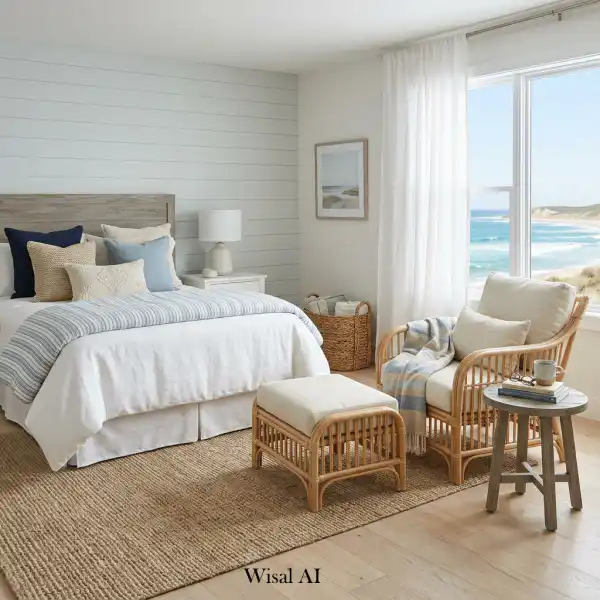
My honest opinion: A rattan armchair or jute rug in a living room does something interesting it lightens the visual weight of the heavier furniture around it while adding natural warmth at the same time. It is one of those additions that makes a room feel like it was designed rather than assembled.
10. Organic Shapes Say Goodbye to Hard Angles
Freehand artistry and hand-painted motifs are defining characteristics of 2026 interiors — surfaces showcasing loose, fluid brushwork where you can see exactly how the material moved. In nature, there are almost no perfectly straight lines. Rivers curve. Trees bend. Stones round at the edges. When these shapes enter furniture — a curved sofa, an oval table, an arched mirror — the brain relaxes automatically.
Design Tip: Replacing a square coffee table with an oval or organic-shaped one is one of the easiest and most affordable changes you can make that creates a measurable shift in the room's energy.
My honest opinion: I have done this swap in three different projects and the reaction from clients is always the same — they feel the room is calmer but cannot immediately identify why. The answer is almost always the curves.
Budget Tip: Arched and oval mirrors are widely available at various price points. Even an affordable one with a simple warm-toned frame delivers the organic shape effect convincingly.
11. Biomorphic Patterns — Nature in Art and Fabric
Biomorphic patterns are shapes and textures inspired by natural forms — leaf structures, wood cross-sections, water ripples, geological formations. These are a core visual element of biophilic design.
They can appear as wallpaper, cushion fabric, area rug patterns, or framed botanical art. The key is that the pattern references nature in form and rhythm, not just in color.
Design Tip: Botanical prints in simple natural-toned frames arranged asymmetrically above the sofa add significant visual richness without cluttering the room. Choose detailed illustrations over loose or abstract interpretations for maximum impact.
12. Warm Layered Lighting — Mimic the Sunset
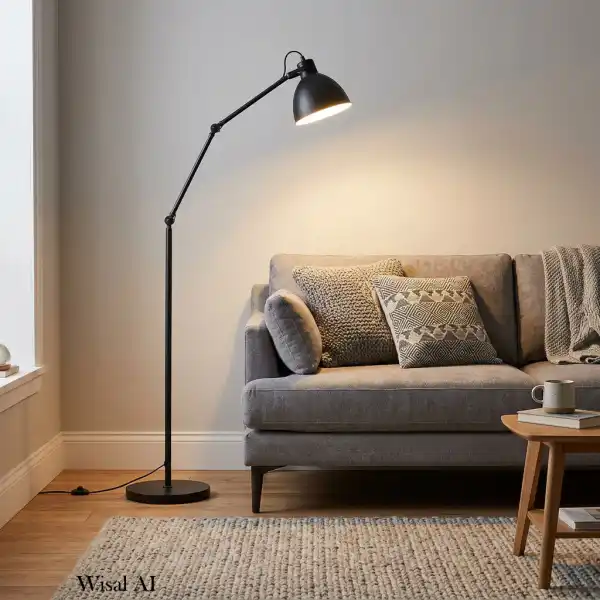
Lighting in 2026 has shifted from a functional necessity into a central design feature. Instead of relying on a single overhead fixture, oversized statement pieces — sculptural pendants, dramatic floor lamps, vintage-inspired sconces — add personality and what designers are calling "intentional atmosphere."
In biophilic design, lighting mimics the natural light cycle — warm in the morning, brighter at midday, deeply warm in the evening.
Design Tip: Use 2700K bulbs in the evening living room without exception. The difference between 2700K and 4000K after sunset is the difference between a room that invites you to relax and one that keeps your brain in work mode.
13. Natural Ventilation Air Is Part of the Design
This is the element most designers overlook. Biophilic design is not only about what you see it is about what you feel and smell. A window that opens onto a garden, cross-ventilation between rooms, a jasmine plant near an open window — these add a full sensory dimension to the living room that no amount of visual design can replicate.
Design Tip: Use air-purifying plants as both a design and functional element simultaneously. Peace Lily, Boston Fern, and Snake Plant are proven air purifiers and strong visual contributors to the biophilic aesthetic.
14. A Statement Plant — The Room's Living Centerpiece
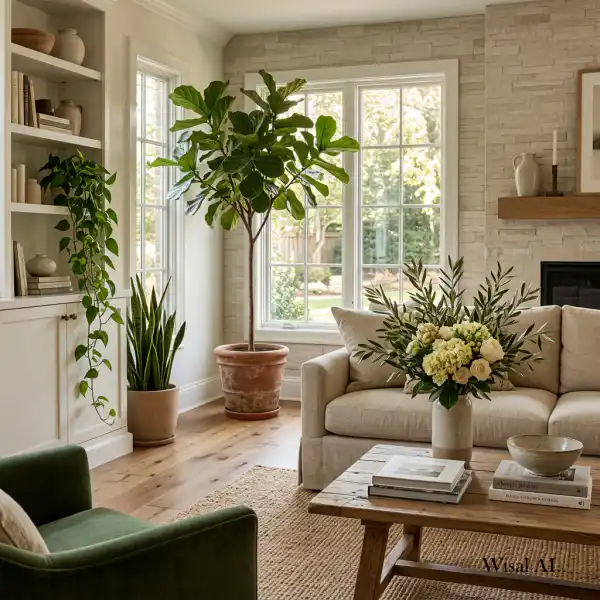
Every well-designed biophilic living room has one plant that functions as an architectural element — not a decorative accessory. This is the statement plant. A Fiddle Leaf Fig with its large, dramatic leaves. An Olive Tree with its elegant, slender silhouette. A Monstera Deliciosa with its iconic split leaves. Each one adds its own distinct character.
Design Tip: The pot is as important as the plant. A beautiful plant in an ugly pot undermines the entire effect. Choose matte ceramic, terracotta, or natural stone vessels that complement the plant's natural character.
My honest opinion: I am personally a strong advocate for the Olive Tree in interior design because it combines Mediterranean elegance with a genuinely natural, slightly wild character. It looks expensive, it is actually accessible in price, and it ages beautifully. It is one of my most consistently recommended statement plants.
15. Handmade Ceramics The Human Touch in Natural Form
Ceramic lighting in 2026 combines sculptural presence with the tactility of hand-shaped clay. Shades range from whimsical clustered forms to thick-walled cylinders and folded planes — many carrying the visible trace of the maker's hand.
Design Tip: A rough-textured ceramic pot with a small cactus or succulent on the coffee table is one of those details that makes visitors ask who designed the room. Simple, natural, considered.
16. Low Level Seating Closer to the Ground, Closer to Nature
Low seating is one of the strongest expressions of biophilic design in a living room because it literally brings you closer to the earth — and with it, a physical sensation of being grounded.
In 2026, designers are questioning whether the traditional sofa still serves us — trading conventional layouts for more diverse, conversational seating arrangements. Floor cushions, very low-profile sofas, and large layered rugs with scatter cushions all create a natural, grounded living environment.
Design Tip: You do not need to eliminate the sofa entirely. Even adding a large floor cushion or a low pouf as a secondary seating option introduces the low-level principle without a full redesign.
17. A Small Herb Corner Near the Living Space
If your living room connects to the kitchen or a terrace, consider creating a small herb corner — Basil, Mint, Rosemary, Thyme. This is biophilic design in its purest form: visual, aromatic, and functional simultaneously. Three senses engaged by one design decision.
Design Tip: Arrange the herbs in terracotta pots of slightly different sizes on a natural wood shelf near a light source. Simple handwritten labels on each pot add a personal, artisanal touch that photographs beautifully.
18. Sustainable and Reclaimed Materials Biophilic Design at Its Deepest
Material costs keep rising, and people are done with disposable furniture. While the polished eco-conscious aesthetic of the early 2020s still leaned on mass production, 2026 is genuinely obsessed with one-off pieces whose origins can actually be traced. The focus is on hyper-local craft — makers using both hand tools and modern techniques to turn salvaged wood and natural offcuts into furniture built to last.
True biophilic design extends to the source of the materials themselves. Reclaimed wood, bamboo, recycled textiles, natural dyes — these are not just trends. They are values.
Design Tip: One reclaimed wood shelving unit or a single piece of furniture with a traceable, artisanal origin brings a layer of story and authenticity to a room that manufactured furniture simply cannot replicate.
The Five Principles Behind Every Biophilic Living Room
After years of working in architectural design, I have come to believe that biophilic design is not a checklist of elements. It is a way of thinking built on five principles:
Nature is not decoration. It is a fundamental design material, as essential as the wall or the ceiling. All five senses matter. Not just what you see what you touch, smell, and hear. Sustainability is not optional. It is inseparable from the biophilic philosophy. The space should change with time. Plants grow, light shifts, natural materials age beautifully. This is not a flaw this is the design working as intended. Intentional restraint over random abundance. One plant in the right place is stronger than ten plants placed without thought.
Where to Spend and Where to Save
You do not need to implement everything at once. Spend on: Natural light optimization (curtains, window placement), a statement plant in a quality pot, one or two pieces of solid wood or reclaimed wood furniture, and layered warm lighting. Smart middle ground: A quality natural fiber rug, handmade ceramic objects, and linen cushion covers. Save on: Herb corners, floor cushions, botanical prints, and plants themselves. These are the finishing layers of biophilic design, and they can be built up gradually at very little cost.
FAQ
What is biophilic design in simple terms?
It is a design philosophy that reconnects people with nature inside built spaces — through plants, natural materials, natural light, natural sounds, and colors inspired by the natural environment.
Is biophilic design expensive?
No. Its most powerful elements — plants, natural light, raw unfinished materials — are often less expensive than their synthetic counterparts. The cost comes from intentional design thinking, not from the materials themselves.
Which plants work best in a living room?
Fiddle Leaf Fig for dramatic scale, Pothos for trailing shelves, Peace Lily for air purification, Snake Plant for low-light conditions, and Olive Tree for Mediterranean elegance.
Does biophilic design work in small living rooms?
Especially well. The less-is-more philosophy prevents overcrowding, and the warm natural palette makes small spaces feel more open and alive. Vertical living walls and multi-level plant arrangements are particularly effective in compact spaces.
What is the difference between biophilic design and simply decorating with plants?
Decorative plants are an aesthetic gesture. Biophilic design is a complete design philosophy that accounts for light, air, sound, material, and spatial layout — plants are one component of a larger intentional system.
Conclusion
When you walk into a well-designed biophilic living room, something happens in your brain before you consciously register it — your breathing deepens, your shoulders drop, your thoughts slow down. That is not coincidence. That is science. And that is design doing its real job. You do not need to rebuild your home from scratch. Start with one uncovered window, one plant at eye level, and one warm-toned light bulb. That is enough as a first step. Biophilic design is not a destination. It is an ongoing practice of designing spaces that respect your fundamental human nature — your biological need to be close to the living world. Start with one idea from this list. Then build from there. — Written by Abdalla Dohrog